
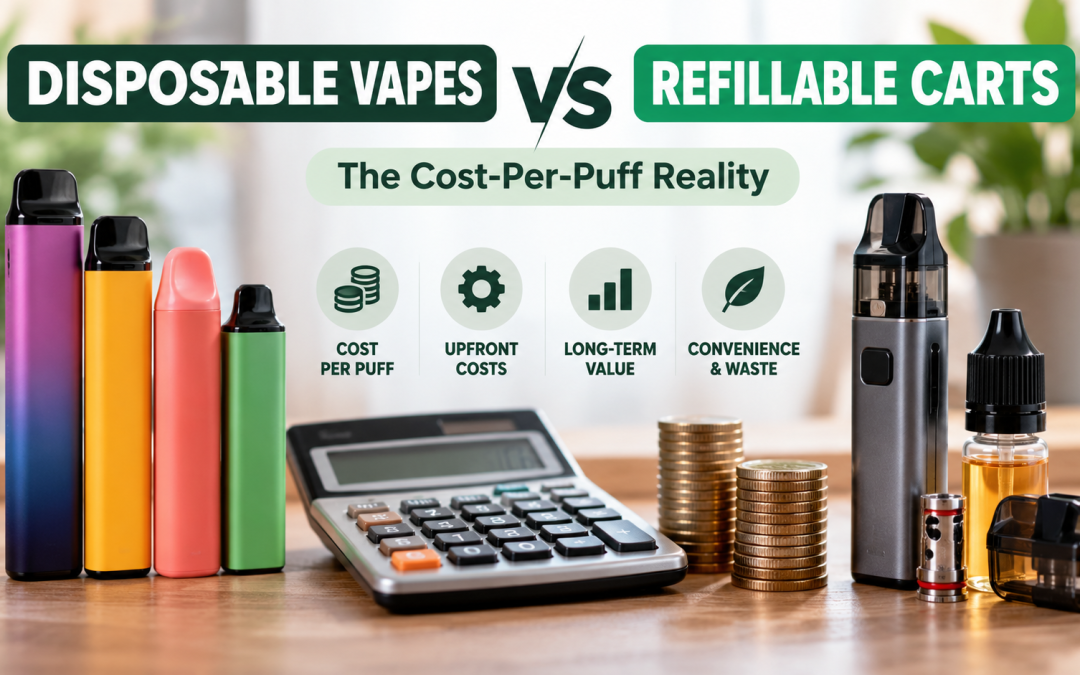
Disposable Vapes vs Refillable Carts: The Cost-Per-Puff Reality
Disposable vapes vs refillable carts: the cost-per-puff reality is not settled by comparing the price of one device with the price of one bottle of e-liquid. We get a fair comparison by tracking what each setup costs over time and dividing that total by the puffs actually taken.
Key Takeaways
- Compare actual use, not advertised puff counts. Draw length, device settings and personal habits affect how long a device or fill lasts.
- Include every running cost. For a refillable setup, count liquid, coils or replacement pods, wasted liquid and eventual device replacement.
- Separate upfront cost from cost per puff. A reusable device may cost more at first, then spread that expense across its usable life.
- Use your own pattern. Light use can make a higher upfront expense slower to recover; frequent use can spread it across more puffs.
- Check what the cartridge means. A sealed prefilled pod is not the same as an open, refillable pod, and not every cartridge fits every device.
- Count convenience and waste, too. Refilling and charging take effort, while disposable devices create more discarded hardware over time.
What Counts as a Disposable Vape, Refillable Cart or Prefilled Pod?
A disposable vape is a ready-to-use device that is discarded when its liquid or battery is spent. Some models have rechargeable batteries, but recharging does not make a device refillable: the liquid chamber remains sealed and the whole unit is still intended for disposal.
A refillable vape, often called an open pod system, has a reservoir that the user tops up with e-liquid. The coil may be replaceable separately, or it may be built into a pod that gets replaced as one unit.
A prefilled pod is a sealed, replaceable container supplied with liquid. It may be convenient to swap, but it is not the same as a refillable pod. The word cartridge is used loosely, so identify whether a particular system is sealed or designed to be filled before comparing costs.
Compatibility matters. Pods and cartridges have specific connections and operating requirements, so a refillable component should be treated as part of its matching device system rather than as a universal replacement.
How to Calculate the Real Cost per Puff
Use the same period and the same measure of actual use for both options. A simple formula is:
Cost per puff = total cost of products used during the period ÷ actual puffs taken during that period
For disposables, add the amount paid for the devices used during that period, then divide by your recorded puff count. Do not substitute the advertised puff count for actual use unless it reflects your own experience with that device and your usual draw style.
For a refillable system, include the cost of the liquid consumed, coils or replacement pods, and a fair share of the device cost. Add liquid lost through leaks, spills or residue left behind when changing pods or flavours. If the device eventually needs replacing, include that cost in a longer-term calculation.
There are two useful ways to track spending. Cash outlay records what you paid during the period, while consumption cost records the portion of your supplies actually used; a newly purchased bottle may last beyond the period being measured.
When the amount of liquid used is clear, calculate its cost per millilitre and multiply it by the millilitres consumed. Then add the allocated cost of coils, pods, device replacement and waste before dividing by actual puffs.
Puff counts vary with draw length, power settings, airflow and individual habits. A puff is therefore a useful personal tracking unit, not a standard measure that guarantees an equal amount of aerosol or active ingredient across different devices.
Why Usage Habits Change the Comparison
The best-value option depends partly on how much you use. A person who takes few puffs may not use a refillable device often enough to recover its upfront cost quickly, while someone who uses a device frequently can spread that initial expense across more use.
Rather than rely on a single example, compare your own figures in three usage patterns:
| Usage pattern | What to measure | What the comparison reveals |
|---|---|---|
| Light | Devices or liquid used over a typical week, plus actual puffs | Whether the refillable system’s upfront cost is justified at your lower level of use |
| Moderate | Regular use across several comparable weeks | How routine liquid, pod or coil expenses compare with replacing disposables |
| Frequent | Higher liquid consumption, component changes and device wear | Whether lower recurring supply costs offset the refillable system’s upkeep and replacement costs |
Use a consistent tracking period and your own puffs, since a friend’s experience or a product’s advertised count may differ from yours. Repeat the calculation if you change settings, devices or draw habits, since those changes can alter consumption.
Average spending by device type provides context, but it does not establish a personal cost per puff. In an analysis of adults in England, people mainly using disposable vapes reported the highest average weekly expenditure compared with people mainly using pod or refillable devices.
When Does a Refillable Vape Reach Its Break-Even Point?
A refillable system reaches its break-even point when its total cost becomes lower than the comparable disposable spending for the same number of actual puffs. The calculation must include both the initial device purchase and its ongoing supplies.
Break-even puffs = refillable upfront cost ÷ (disposable cost per puff − refillable running cost per puff)
This formula works only when the disposable cost per puff is higher than the refillable system’s running cost per puff. If the difference is zero or negative, the refillable setup does not reach break-even under those assumptions.
For a useful estimate, include liquid, coils or pods, leaks, priming waste and replacement hardware in the refillable running cost. Compatibility changes or battery wear can also bring forward a device replacement, so use a realistic lifespan rather than treating the initial device as permanent.
Calculate the break-even point using your own observed use, then compare it with how long you expect to keep using that system. A theoretical saving matters only if your real usage lasts long enough to pass that point.
Filling, Charging and Maintenance Have a Cost
Refillable devices take more attention than ready-to-use disposables. You need to fill the pod carefully, keep liquid away from the device’s electrical contacts, charge the battery and clean residue when needed.
A new coil needs time to absorb e-liquid before use; operating it too soon can damage it and waste the component. Follow the device maker’s filling and priming instructions, and avoid overfilling because leaks add to both liquid waste and cleanup.
Coils do not have one replacement interval that applies to every user. Replace a coil when its flavour becomes persistently burnt or muted, or when performance declines; if the coil is built into the pod, replace the pod instead.
Battery lifespan affects the long-term calculation as well. Charging a refillable device does not remove its eventual replacement cost, so include replacement hardware when estimating total ownership over a longer period.
Convenience, Portability and Electronic Waste
Disposables are simpler to carry and require no filling or separate coil changes, which can suit someone who prioritises low-maintenance use. Refillable systems require more preparation and cleaning, but they let the user replenish liquid without discarding the entire device each time the reservoir is empty.
These convenience differences have a practical value, even though they do not appear directly in the cost-per-puff formula. Decide how much time and upkeep you are willing to accept, then compare that preference with the measured running cost.
Disposables contain electronic components and batteries, so they create discarded hardware as well as packaging. Refillable devices also become waste when their batteries or electronics fail, but refilling avoids discarding the complete device after every supply is used.
Do not put battery-powered vape devices in ordinary household waste. Use an appropriate battery or electronic-waste collection route available in your area, and keep damaged batteries separate from general rubbish.
Frequently Asked Questions
Can cost per puff tell me how much active ingredient I inhale?
No. Cost per puff measures spending against a count of draws, not the amount of a particular ingredient delivered. Concentration, device design, settings and draw technique all affect what a puff represents.
Should I count liquid left in a pod when I change flavours?
Yes, if you routinely discard liquid when switching flavours, record it as waste in your refillable cost calculation. That gives a more realistic result than treating every millilitre purchased as liquid successfully used.
Does charging a refillable vape affect its cost per puff?
It can be included in a full ownership calculation along with liquid, components and replacement hardware. The main comparison should use your actual costs, including charging.
Does a lower cost per puff mean one option is better in every way?
No. Cost per puff compares spending, but it does not measure convenience, maintenance time, device reliability or ingredient strength. Consider those separately when choosing between a disposable and a refillable system.
What should I do if my refillable device leaks often?
Count leaked liquid as waste because it raises the effective running cost. Check that the pod is correctly assembled and filled according to the device instructions, and replace damaged components rather than continuing to use them.
Conclusion
Disposable vapes vs refillable carts: the cost-per-puff reality comes down to your actual consumption, not a headline puff count or a one-time price comparison. Track real puffs, liquid used, replacement parts, waste and eventual device replacement across the same period.
Disposables can offer straightforward use, while refillable systems trade extra upkeep and an upfront expense for a different pattern of recurring costs. Use your own numbers to calculate the cost per puff and break-even point, then weigh the result against convenience, maintenance and electronic waste.
Checkout Our Best Selling THC Vapes and Disposable Carts